


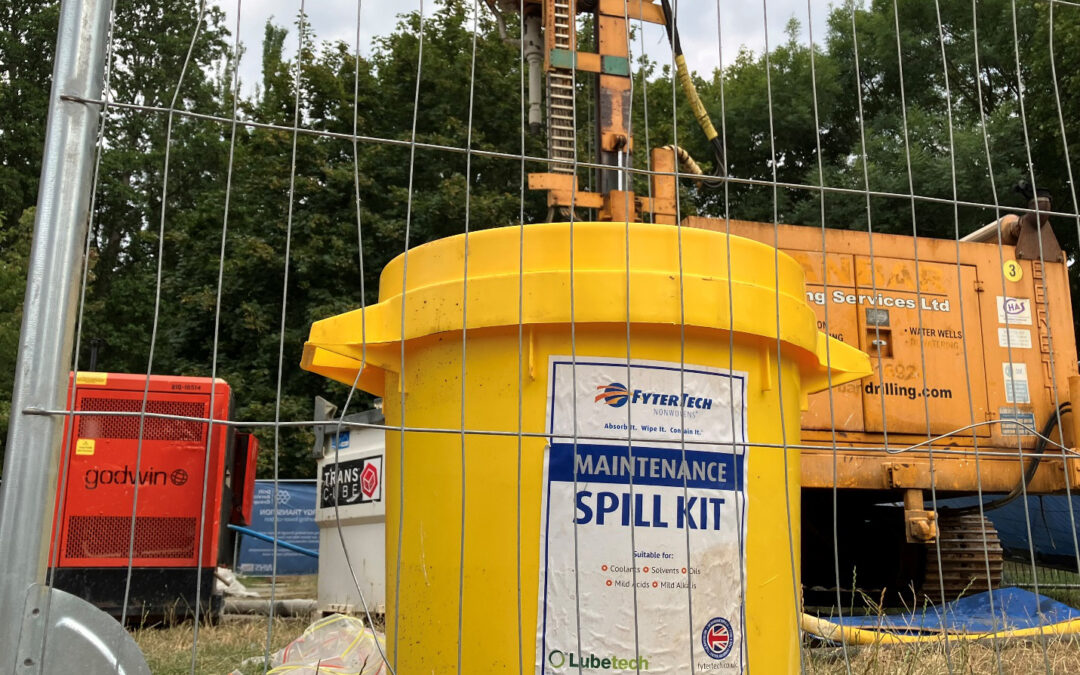
Many questions remain unanswered about plans to pump water from the drilled aquifer beneath Ladywell Fields for a new heat and cooling pump at Lewisham Hospital. QWAG has sought clear answers. Here’s what we know, and what remains unclear.
Drilling for information
QWAG spent summer 2026 seeking answers about the plan by Lewisham and Greenwich NHS Trust (LGT). Initial concerns range from the lack of public information to the likely effects, especially on water – see our first post.
The at-a-glance table below shows we have found out some things – certainly more than was made openly available by LGT.
Mostly, though, the table lists lots of vital information that remains unclear and unknown, often because it is not available to the public.
Uppermost is the integrity of the aquifer and protection of the nearby River Ravensbourne. LGT agrees that the success of the heat pump depends on the aquifer being able to provide enough water for the lifetime of the project. In short, if the aquifer is harmed, the hospital’s heat pump will ultimately fail.
Particular uncertainty is the potential effects of heated water being returned to the aquifer and raising its temperature, and the risk of contaminants and the possibility of thermal plumes spreading out from the boreholes and fractures under the park.
Of course, the Trust may consider securing enough water to sustain the heat pump a success, even if the aquifer is harmed, damaged or compromised in some way.
As we said in our first article, everything might be fine. If so, how would anyone know? If there’s no secrecy, which is what QWAG was told when we first sought information, being open should be fine.
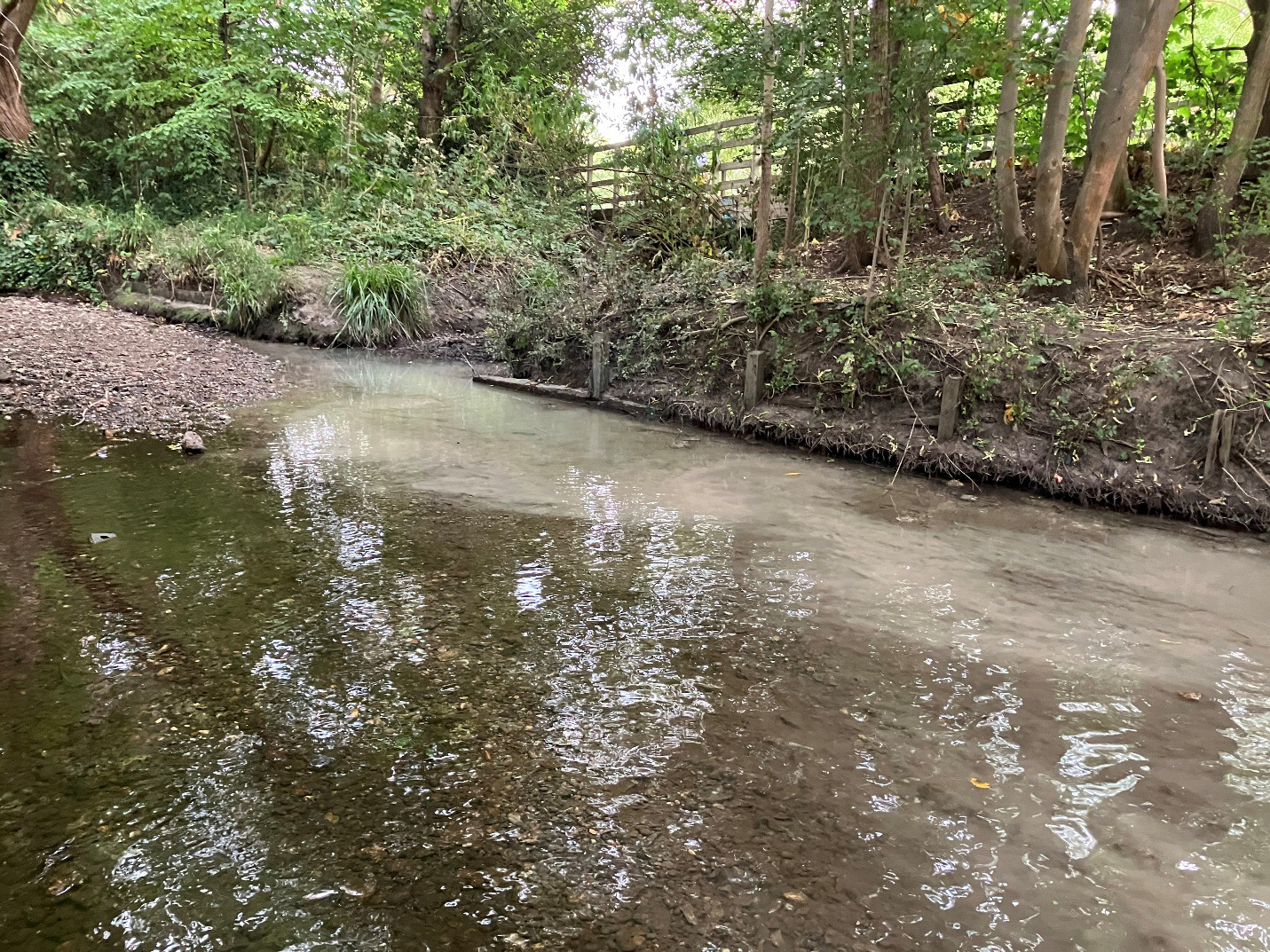
LGT says chalk from the drilled aquifer reaching the River Ravensbourne in mid July 2026 was ‘unexpected’. Photo: QWAG
What’s needed now
The Trust should:
- Be open on all matters and not hide information behind claims such as ‘commercial confidentiality’
- Take full responsibility for any harm that occurs to the aquifer and river such as the aquifer heating, and pollution and other effects on groundwaters and the river
- Spell out how its short term test drilling during summer 2026 applies to conditions all year round.
Lewisham Council, as the local planning authority, should ensure that:
- All information on a publicly funded project is publicly available in full
- It resists any attempts by the Trust to withhold information including by claiming ‘commercial confidentiality’
- Minutes of project board meetings with the Trust from the start in 2024 are published
- The project’s risk and issues register is published showing a named individual responsible for addressing each item
- The public can fully participate in any planning or other approval process and decisions
- No environmental harm will result to the public park, which the Council owns, the aquifer and the river, if it approves the plan
- Liability for any harm does not fall on residents, or on the public purse.
| What we know from the Trust | What we still do not know, despite asking |
| Project approval:
Lewisham Council was approached late in 2024, joined the project board, started supporting the project and approved the Trust’s test drilling in Ladywell Fields sometime in 2025. |
Restricted information:
In late 2025, information about the Trust’s plans was shared with some local residents and Friends of Ladywell Fields, who were asked to keep the plans to themselves. Most people would not have known of the test drilling and the plans until work started on site in early June 2026. |
| Use of the Fields not the hospital site:
The Trust says its hospital site cannot accommodate the project. |
Potential expansion:
It is not clear whether the heat pump would need to be expanded – with consequential demand on the aquifer and effects on the river and wider area – should the hospital be expanded or reconfigured at some time in the future. Whether the hospital’s plan represents an effective monopoly on the aquifer and wider site, or if other uses might also be accommodated because a precedent will have been set. |
| Test drilling results:
Results from the test drilling in summer 2026 will inform a planning application and a decision by the Environment Agency to license a permanent scheme. We were told that a full assessment of risks, effects, and mitigations will be carried out if the full-scale project proceeds. |
Not shared:
The test results have not been shared. How two to three days of testing after nine weeks taken to drill the test boreholes in summer 2026 will apply to year-round use, with a completely different configuration of water abstraction, piping, heat exchange and re-injection of water. Whether all information will be openly available, or if some information will be withheld including citing commercial confidentiality. |
| The aquifer:
Ensuring the aquifer functions properly is central to the hospital’s heat and cooling pump working – the Trust told QWAG everything depend on this. The Trust says its test drilling has established that enough water can be extracted from the aquifer and other data allows accurate modelling of the temperature impact of the project. The Trust’s consultants reviewed the site’s geology and groundwaters (their hydrogeology) and although the availability of water varies, the testing showed that, at present, the aquifer and groundwaters can supply the pump with sufficient water. Assumptions are also based on a 1997 technical report: The Physical Properties of Major Aquifers in England and Wales – British Geological Survey Technical Report WD/97/34. |
The state of the aquifer:
The Trust said in May 2026 that it had completed a hydrogeological survey to confirm whether the location was suitable. As the survey has not been made public, no technical information such as on the state of the aquifer and its characteristics has been made publicly available. Following the testing, the Trust has updated its hydrogeological survey, which is also unavailable. Assessments of the particular characteristics of the aquifer and fractures, of groundwater conditions, and the effect of taking water and reinjecting it to the aquifer and groundwaters is unavailable. The Trust says the Environment Agency’s regional groundwater model (known as the London Basin Model) is among the most detailed pictures of the aquifer and local groundwaters, but that is also unavailable to the public. |
| Effects on water:
The Trust’s test drilling and the taking (abstracting) and reinjection of groundwaters was approved by the Environment Agency which gave permission for the test activities. |
Unexpected events:
Chalk sediment from the drilled aquifer “unexpectedly” escaped into the nearby River Ravensbourne in mid-July 2026. It is not clear why this happened, although the Trust said this would only be a risk during the test drilling and pumping phase. However, the Trust has given no assurances on how other unexpected events such as contamination with fuel oils, grease, PCBs from hydraulic fluids etc from the drilling process or solvents used in the heat pump, or – if used for cooling – the effects of heat on the aquifer, ground water and river will be prevented. |
| Effects on Ladywell Fields:
The Trust commissioned environmental, arboricultural (trees) and ecological surveys. Lewisham Council approved the works. The Trust says the the test drilling is “localised” and “reversible”. Following the arboricultural survey, the Trust moved the position of the southern boreholes closer to the northern boreholes. |
Inadequate assessments:
The environment survey was more a list of wild species, than an assessment of effects. If there have been assessments of the impact of the test phase or more importantly of the full project on the ecosystems above and below ground, those have not been provided. How the test works are “localised” and “reversible” when deep and wide boreholes have been drilled and will remain if the project proceeds. Moving the boreholes closer together increases risk of interference. This issue has not been mentioned by the Trust. Impacts of operations on the Fields have not been acknowledged, especially the effect of heat plumes spreading from the northern boreholes and fractures and the pipes connecting them via the park. The impact of the noise of pumping in the boreholes and piping and impacts on underground ecosystems has not been considered. |
| Choice of heat pump:
The government’s energy department (DESNZ) has provided almost £18m funding for an open loop ground source heat pump project. The council and Trust have given a number of different reasons for the choice of technology choice, without any supporting information. This project, and the council’s existing ground source heat pump project at Brockley Rise, have gas boiler backup, continuing the demand for gas for the life of the project. The council says it wants to apply the learnings to social housing projects. |
Lack of technical information:
No technical, environmental or business justification has been provided. No technical reference material information has been made publicly available. The reasons for the choice of technology do not appear to use up to date studies that apply to a UK climate. This needs to reference current results from alternative technologies, full lifecycle analysis, their efficiency in a UK climate, and comparative cost. |