


Over 35 years of river-powered regeneration for Bromley, Greenwich and Lewisham
The Government says QWAG is ‘A great example of environmental action’
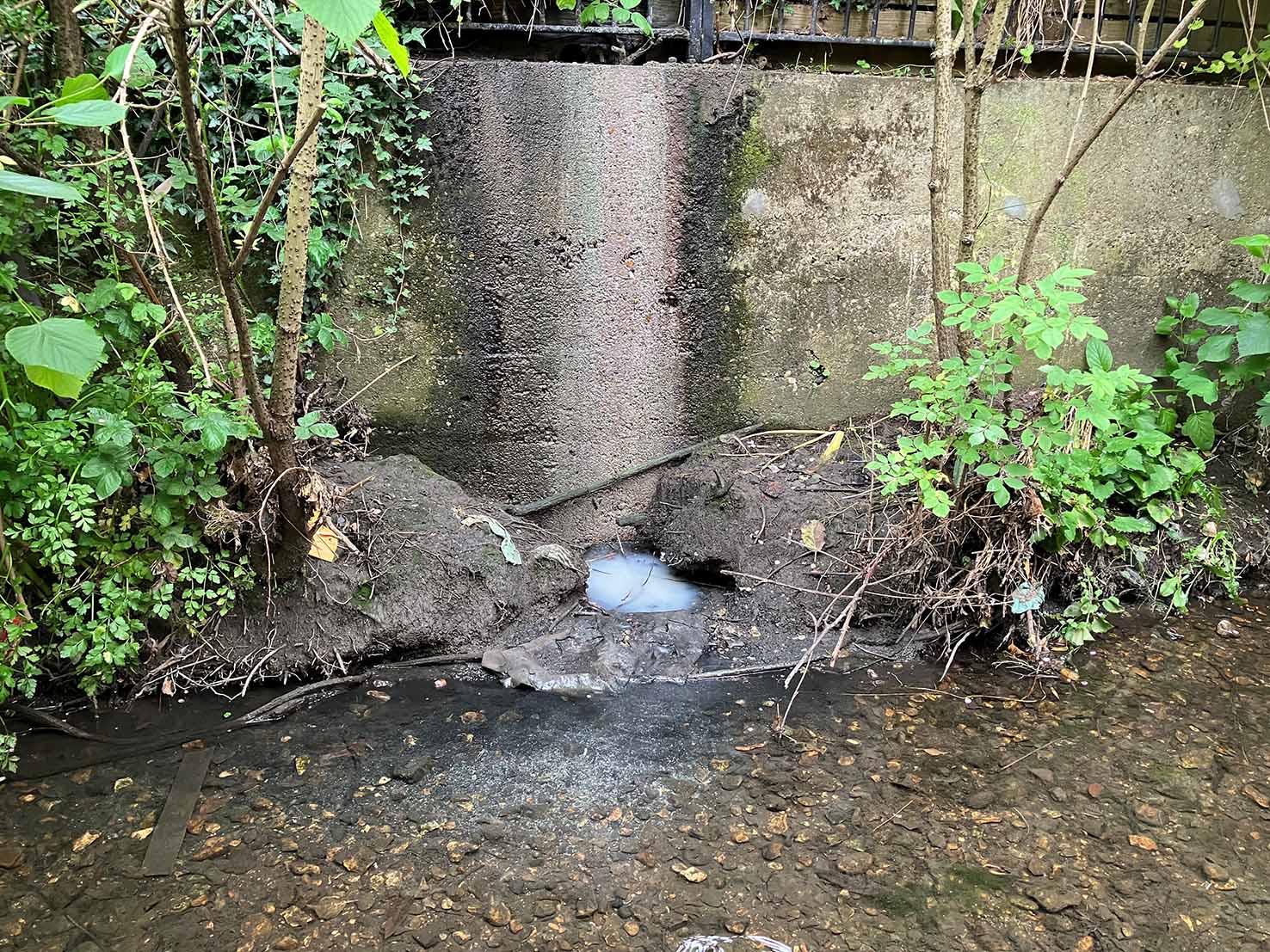
A milky pool of contamination flushed direct into the River Quaggy from the problem property Credit: QWAG/ Paul de Zylva
Pollution saga – 1 house, 1 river, 4 years
“We are thoroughly hacked off by the lack of action and how we have been ignored despite trying to do the right thing in the right way.”
QWAG to Lewisham Council, November 2025
Since summer 2022 QWAG has tried to stop pollution of the River Quaggy from a house in Hither Green, Lewisham.
This single saga exposes a systemic failure by elected politicians, council officers, Thames Water and the government’s weakened Environment Agency.
Years of deliberate pollution of a cherished local river from just one property highlights how:
- Pollution harming our local rivers is effectively downgraded and ignored.
- The government’s better-late-than-never focus on sewage spills means that the other types of pollution that are also harming our rivers are routinely overlooked.
- The way for people to report pollution is complicated, unresponsive, and is not fit for purpose for this area.
The 4-year saga also shows:
- Claims by those in authority to care about the dire state of our rivers are hollow because they are unresponsive, stuck in siloes and unwilling to take responsibility.
- The insights and goodwill of community volunteers and river action groups such as QWAG is taken for granted, and volunteers are patronised as a matter of course.
Eyes and ears
We often spot river pollution and other problems.
We look for what might be harming our rivers and preventing them from moving on from being officially classed as being in poor ecological condition.
We work for lasting solutions not sticking plasters.
We’re just one set of eyes and ears on our local rivers but we’re quite well-known and people report their concerns to us and ask for help.
But if experienced river action groups like us have such a hard time getting even minor sources of pollution taken seriously, what does that mean for members of the public?
Water companies, the government and its weakened Environment Agency say they want people to take time to report pollution. But the pollution reporting system for this area is outmoded, unresponsive, opaque and too often leads to nothing happening.
That is compounded by official and individual incompetence with too many in positions of authority happy to pass the buck instead of taking responsibility to get things done.
Hallmarks of failure
This single saga sees community volunteers spending years – 3-4 years in this case – trying to be heard about an issue that could have been addressed in a matter of weeks.
When public concern continues about the poor state of our rivers and freshwaters, the saga shows that rigid ways of working, buck-passing, washing hands of the issue and giving community groups the silent treatment are the order of the day.
The government, its agencies, councils, and water companies claim they value and want to work productively with community groups and the public. Yet agile, responsive, and co-operative ways of working are nowhere to be seen.
Hallmarks of the saga include:
- Unresponsiveness – a complete failure to respond to repeated requests to act swiftly to prevent pollution from just one property.
- Patronising volunteers – an attitude toward community volunteers including us, an experienced river action group that might know what it is talking about, that contrast with the usual claims that voluntary action is valued.
- Individual and collective failure to meet own standards – with either nil response or automated emails being the only response received followed by months of silence. Promises of responses within 10 working days failing to materialise was often the best we got.
- Buck passing at all levels – from local councillors, officers and the MP to Thames Water and Environment Agency staff – all had to be chased, and chased, and…. It’s not clear that any individuals took responsibility to liaise with others to secure swift resolution.
- We know best attitude / failure to listen – the Council, Environment Agency, Thames Water each wasted our and their time, and missed opportunities to act themselves, often insisting on doing things their own way instead of simply working with us to get things done to avoid the kind of delay seen with this case.
- No overall controlling hand – someone who would ensure internal understanding, direct and oversee action to secure swift resolution, and to ensure well-informed and sensitive contact and communication. For example, someone who would avoid the sending of patronising emails, having our time wasted by being told things we already know, or being asked to report the problem when the system to do that was unfit for purpose.
- Failure to talk – even when we had provided a full dossier on the case, and repeatedly offered to talk and meet, no direct conversations were offered to get the grips with the issues and start resolving the problem.
- Only acting when we went public – In November 2025, after years of being ignored or hearing nothing back, QWAG posted a simple message on social media. We should not have to do that to gain attention every time there is an issue. But it worked. Is that how we now have to communicate to get a proper, respectful responses from anyone in authority?
During the 4-year saga, Thames Water told us there was “no concern with the health of the river”, and the Environment Agency told us the daily discharge “presented a relatively low risk to the environment. In light of this it is unlikely any further action will be taken…”
In short, don’t worry about it.
For a timeline of the pollution saga see the longer version of this article.
The saga continued into 2026.
It took until later January 2026 for Lewisham Council to stop the pollution from the property.
This single saga highlights systemic failures that require a complete reset in how the council, its elected representatives and officers, and the Environment Agency and Thames Water work together and with community groups like QWAG.
If there’s a silver lining…
If there is a way forward, it would be to secure a credible pollution reporting system for the area.
The current system is overly geared to sewage spills when those are rare and are not the main reason for our local rivers and freshwaters being stuck in a cycle of poor water quality and failing ecological condition.
The area needs a tailored pollution monitoring system – one that works for the area because the public can trust it and won’t have to wait for action and resolution as we have since 2022.
Local MPs, councillors and the Environment Agency should now get behind that.
Will they now work with QWAG to secure that, and help improve our local rivers by unleashing them from concrete, and or will we have to wait, and wait, and wait…?
UPDATE: Lewisham hospital’s drill for water – What we do and do not know
Many questions remain unanswered about plans to pump water from the drilled aquifer beneath Ladywell Fields for a new heat and cooling pump at Lewisham Hospital. QWAG has sought clear answers. Here’s what we know, and what remains unclear. Drilling for information...
Mayor Khan dives into London’s rivers Will his plan sink or swim?
'Water Disgrace' banner on the March for Water 4 November 2024 Photo: QWAG Mayor of London, Sir Sadiq Khan, launched his Clean Rivers and Waterways Plan on 29 July 2026. The Mayor’s welcome dive into our rivers is a big change from a few years ago when he was...
Drilling for water – QWAG probes Lewisham Hospital’s heat pump plan in Ladywell Fields
One of the boreholes drilling into the Ladywell Fields aquifer, July 2026 Photo: QWAG Water from the aquifer beneath Ladywell Fields could soon supply a new heating and cooling system across the River Ravensbourne at Lewisham Hospital. Here’s QWAG’s snapshot of what...
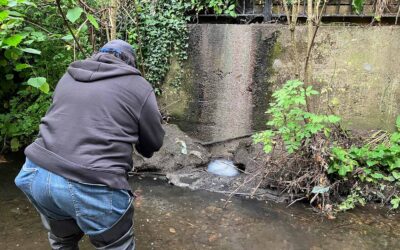
Pollution saga – 1 house, 1 river, 4 years
“We are thoroughly hacked off by the lack of action and how we have been ignored despite trying to do the right thing in the right way.” QWAG to Lewisham Council, November 2025 Since summer 2022 QWAG has tried to stop pollution of the River Quaggy from a house in...
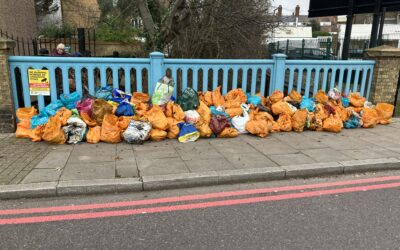
200+ bags of medical waste removed by QWAG
Fly-tipping is rife – on our residential streets, roads, in parks and in our rivers. In one day, QWAG volunteers removed over 200 shopping bags from the banks of the River Quaggy at Lee Green near where the river flows across the borough boundary from Greenwich into...
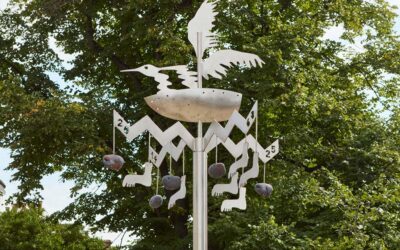
New Quaggy ‘Street Waders’ sculpture
If you go down to central Lewisham, you will notice the skyline changing. Look closely and you’ll see the new Quaggy sculpture, Street Waders by Anna Reading. New skyline, new sculpture Central Lewisham is changing. For some, the skyline and street layout is barely...

Remembering Lewisham’s 1968 floods – and lessons 50+ years on
Over 50 years ago, on 15 September 1968, much of Lewisham flooded.
QWAG has searched the archives for pictures and people’s recollections of the floods and the clean-up.
We’ve also found out what the local MP of the time and the government thought of our local rivers and what they had planned for them.
QWAG is part of We Are Lewisham marking Lewisham being London Borough of Culture in 2022
We are working with Goldsmith’s University of London and Lewisham Council on In Living Memory, a post WWII People’s History of the borough.
A major post war event was the Great Flood in 1968 and 2022 is the 54th anniversary.
Do you, your family and friends recall the flood and its aftermath?
Do you have pictures, diary entries or other writings you would like to share?
We’d also love to gather some audio recordings of people’s recollections. Would you be willing to be interviewed for an audio recording of your flood memories?
All recordings, pictures and writings will form part of a People’s History archive curated by Goldsmiths’.
To share any memories and information on how anything you kindly offer to the project will be used please see Lewisham Under Water.

Picture credit: Image courtesy of the Lewisham Local History and Archives Centre

Get set for the last major restoration of the Quaggy
Imagine being able to walk from central Lewisham to Lee Green, over the border into Greenwich and then on to Grove Park – all within a stone’s throw of a restored, fully functioning River Quaggy.
We are now planning the last major restoration of the River Quaggy – and we want you to get involved.
Join QWAG!
Our focus is the River Quaggy – one of the UK’s most heavily engineered rivers – in SE London.
We’ve a proven record of restoring the natural role of the Quaggy and other local rivers to reduce flood risk, boost the river’s wildlife and people’s interaction with their local rivers. It’s what we call ‘river-powered regeneration’.

Quaggy by A20
The aim of the WFD, an EU initiative to improve catchments within the UK, is to report on the progress toward the achievement of good ecological potential for river catchments, including the Ravensbourne. Issues such as degraded habitat, diffuse pollution, invasive species, urban growth & regeneration affect us all and the meeting set out to see how we could all help one another in reaching WFD standards by 2015. Representatives from the Environment Agency, Thames21 and the boroughs of Lewisham, Greenwich and Bromley joined QWAG’s chairman Paul de Zylva and trustee Lawrence Beale Collins in acknowledging the level of agreement and planning required to achieve positive status for the WFD. Work such as the annual 3 Rivers Clean Up and ongoing work by the Rivers and People Project in Lewisham were hailed as shining examples of the kind of teamwork necessary to help the WFD cause. QWAG already works with many of the stakeholders at the get-together and so is well placed to respond to the challenges put forward by the WFD. We have been asked by the Environment Agency to highlight problem areas along our side of the catchment where pollution, reduced habitat status and invasive species still present problems. We have therefore invited the agency for a ‘walk along the river’ where we will show them some of the great work that has already been completed along the Quaggy and some other areas where there is room for improvement.

Sutcliffe Park
This scheme requires naturalised sections of the river and uses large open spaces beside it for temporary water storage in times of flood. The largest of these is Sutcliffe Park (above). Its transformation from an underused park to an urban oasis for wildlife has recently won two prestigious awards. Until QWAG intervened, the River Quaggy in south east London had suffered a fate typical of urban rivers. Much of its flood plain had disappeared under the relentless growth of the suburbs. In a vicious circle, the inevitable flooding that followed led to misguided alleviation measures that only made the problem worse. By 1990 much of the river flowed lifelessly in concrete channels and culverts, awaiting the seemingly inevitable coup de grace. Since its formation, QWAG has promoted, initiated and taken part in restoration projects along the Quaggy. In 2002 a much acclaimed naturalisation scheme broke out the river from its hedge-lined concrete channel in Chinbrook Meadows, recreating a natural meandering stream (below).

Chinbrook Meadows
QWAG has proved that by restoring the Quaggy we can bring wildlife, education, amenity and beauty into the fabric of our urban environment. Our challenges now are to achieve further restoration and protect the river from the many threats to its well-being. Why not join QWAG and help us help the Quaggy?